

imenada Imen Datis Asia Co

What is a diaphragm pump and where is it used?

Diaphragm pumps are known as essential tools in various industries and have attracted the attention of many users due to their unique features. These pumps provide reliable performance and are resistant to various pressures and liquids; however, they may also have disadvantages due to factors such as flow fluctuations, vibration, and high noise levels. It is important to be aware of the advantages and disadvantages of diaphragm pumps.

Imen Datis Asia Technical and Engineering Company is one of the top providers of fire alarm and extinguishing equipment, all types of fire fighting and water supply pumps, etc. in the country, with the aim of increasing safety and protecting people’s lives and property.

Main titles

What is a diaphragm pump?

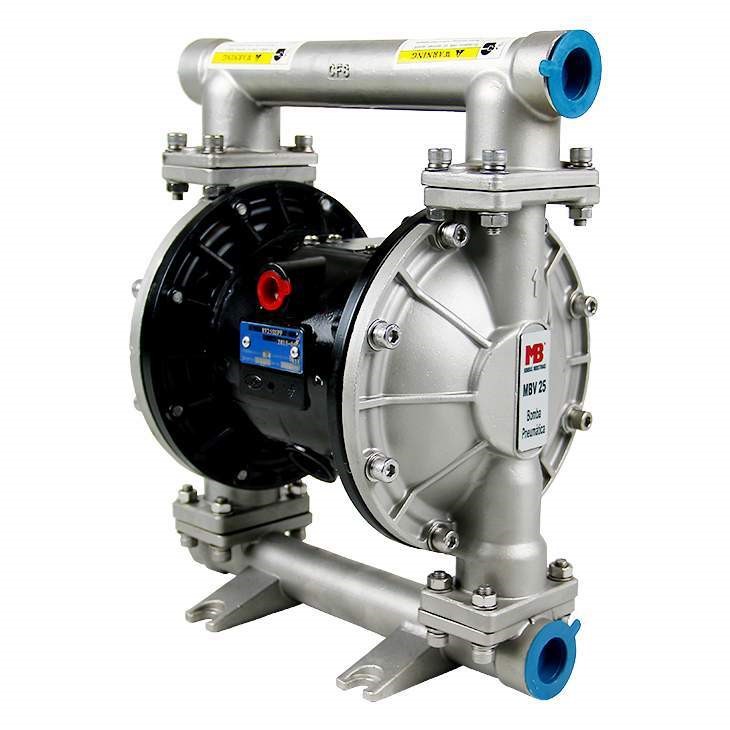
The Air Operated Diaphragm Pump is a positive displacement pump with high suction power and no need for air extraction. This pump has no mechanical seal and is explosion-proof. Also, due to its ease of use, it is suitable for pumping all types of acids, bases, liquefied gas, edible and industrial oils, solvents and other fluids.

The salient features of diaphragm pumps include a simple operating mechanism, reasonable price, high efficiency, and ease of use. These pumps usually have two diaphragm plates and, depending on the type of fluid (flammable or non-flammable), electric systems or pneumatic actuators are used for operation.

Types of diaphragm pumps

Diaphragm pumps are known in industry and production as one of the key and essential tools for transferring and pumping various materials. These pumps, with their special features and capabilities, are used in numerous industries such as chemical, petrochemical, mining, water and wastewater, food and pharmaceutical. The unique advantages of diaphragm pumps have made them an important and efficient tool.

How a diaphragm pump works

To understand how diaphragm pumps work, you first need to know some key points about these pumps. The most common type of these pumps is a dual-channel diaphragm pump. These pumps consist of two diaphragms and a chamber that are connected by a connecting rod. The diaphragms move in a linear direction. Air pumps are equipped with an air distribution valve that is responsible for introducing compressed air behind the diaphragms. By changing the air pressure behind each diaphragm and exhausting the air from the other diaphragm, the diaphragms begin to move. The diaphragm pump works by continuously reciprocating and reducing the pressure, the fluid enters the pump tank, and then, as the pressure increases, the fluid is transferred and pumped out.

Diaphragm pumps use different types of one-way valves such as reeds, ball valves, and check valves. Pumps that use reed valves are capable of passing fine solid particles. In these types of pumps, due to the presence of solid particles and their tendency to settle, the pump outlet is located at the bottom of the chamber so that the fluid with solid particles can be easily removed. In pumps where the outlet is located at the bottom, the transfer of viscous fluid with low flow rate and high pressure due to the lack of air evacuation inside the chamber reduces the pump displacement unless the fluid flow rate is high and the air is evacuated along with the fluid.

Diaphragm pumps with ball valves are considered the best type of these pumps. In these pumps, the inlet is located at the bottom of the diaphragm chamber and the outlet is located at the top. This design allows gases inside the pump chamber to be easily discharged with the fluid due to their lightness. Placing the outlet at the top of the pump allows air or vapors inside the pump to easily exit the chamber with the fluid.

Diaphragms are usually made of elastomer and act as a mechanical seal. Depending on the material used, these diaphragms can operate over a wide range of temperatures and pressures without the need for lubrication.

Manual diaphragm pump

A manual diaphragm pump is a type of pump that is operated using human power. These pumps use flexible diaphragms to transfer fluids and are divided into two categories: lever manual diaphragm pumps and piston manual diaphragm pumps.

Lever-operated manual diaphragm pump: In this model, the movement of the lever causes the diaphragm to move up or down. This movement creates pressure in the pump chamber and transfers fluid.

Piston diaphragm hand pump: In this type of pump, the movement of the piston causes the diaphragm to move up or down. This movement creates fluid pressure in the pump chamber and transfers it to the outside.


Electric diaphragm pump

Another type of diaphragm pump is the electric diaphragm pump, which uses an electric motor to move the diaphragm instead of compressed air. These pumps are suitable for applications that require automatic pumping of fluids without the use of an air compressor. In these pumps, the electric motor drives a crankshaft. The crankshaft is connected to the diaphragm, and its movement causes the diaphragm to move back and forth. This movement creates the necessary pressure in the pump chamber and causes the fluid to be pumped.

How a diaphragm pump works

A diaphragm pump moves fluids by the continuous reciprocating motion of diaphragms. The driving force of this pump is provided by compressed air, which is transmitted through an air distribution system to the chamber behind the diaphragms. The diaphragms are mounted oppositely on a common shaft and move in opposite directions. The working cycle of a diaphragm pump is explained in full below:

  1. Compressed air is transferred to the chamber behind diaphragm A.
  2. The movement of the shaft to the left causes the diaphragms to move, which increases the volume of the liquid chamber B and at the same time reduces the volume of the liquid chamber A (Figure a). To direct the liquid in the correct direction, ball valves are installed on both sides of the chamber, which prevent the liquid from entering the chamber A when the liquid is discharged from the chamber B.
  3. Upon completing one shaft movement, the distribution system evacuates air from chamber A and transfers it to chamber B.
  4. The shaft moves to the right, reducing the volume of liquid chamber B and increasing the volume of liquid chamber A (Figure b). At this point, liquid is discharged from chamber B and suction is applied to chamber A, filling it with liquid.
  5. Upon completion of the second shaft movement, the distribution system evacuates air from chamber B and the cycle repeats again by directing air to chamber A.

What is the use of a diaphragm pump?

In this section, we intend to fully familiarize you with the applications of diaphragm pumps so that, if needed, you can easily solve your problems by purchasing different types of these pumps.

As we mentioned earlier, diaphragm pumps are positive displacement pumps and have special features and capabilities. The most important applications of these pumps include the following:

  • Transportation of all types of alcohols
  • Discharge of liquid gases
  • Pumping flammable fluids
  • Pumping edible and industrial oils
  • Pumping acids, bases and edible fluids
  • Transport of volatile solvents and explosives

Given these features, it can be predicted that diaphragm pumps will be used in various industries due to their diverse functions. These industries include:

  • Petrochemicals
  • Food and pharmaceutical industries
  • Mine
  • Water and sewage
  • Road construction
  • Glue and resin
  • and other similar industries.

Advantages and disadvantages of diaphragm pumps

Advantages of diaphragm pumps

  • No Leakage: Diaphragm pumps are leak-proof because they do not use mechanical seals. Leakage only occurs if one or both diaphragms rupture. It is recommended that diaphragms be replaced periodically according to the manufacturer’s instructions.
  • Liquid Type: AODD pumps are capable of pumping various types of liquids, including slurries (abrasives), thick liquids (adhesives), corrosive liquids (acids and bases), solvents (alcohol and gasoline), sewage, and flammable and toxic liquids.
  • Dry operation: Due to the lack of mechanical seals or moving parts, they do not require lubrication or cooling, so diaphragm pumps can operate indefinitely without liquid or in a dry state without damage to the mechanical parts.
  • Strong suction: Diaphragm pumps are self-priming and, based on the liquid concentration and the size of the pump’s inlet and outlet, are capable of suction from a depth of 8 meters.
  • Explosion-proof capability: Because AODD pumps do not directly use electricity for movement, these pumps can be used in sensitive areas with the potential for ignition and explosion.
  • Waterproof: Diaphragm pumps can also be used submersible if the air outlet is above the water surface.

Disadvantages of diaphragm pumps

  • Fluctuation: The output flow of diaphragm pumps fluctuates, and when a uniform flow is required at the output, using these pumps alone is not appropriate.
  • Filtration: The air distribution system is designed to provide the necessary control and power for the AODD pumps. The components of this system are simple and inexpensive, and they are easy to maintain. However, to prevent environmental contamination, it is necessary to remove contaminants such as oil from the exhaust air by filtering.
  • Freezing: If the air entering the pump contains moisture, there is a possibility of freezing in the distribution system or air valve. To solve this problem, the pressure in the air tank can be reduced or a dryer and heater can be used.
  • Vibration: Fluctuations in the output flow of diaphragm pumps can cause destructive vibrations. To prevent leaks and damage to the piping system, a vibration damper or pulsation damper can be used at the output of air pumps.
  • Noise level: Diaphragm pumps produce a lot of noise due to the output fluctuations as well as the constant air escaping through the exhaust valve. Using a muffler can reduce the noise level of these pumps.

What is the material of a diaphragm pump?

Pump shell material:

  • Al (aluminum): suitable for general use
  • PP (polypropylene): Suitable for acids and bases, where the type of acid, concentration and operating temperature have a great impact.
  • S.S316 (stainless steel): Suitable for all types of acids and corrosive materials
  • AC (Acetal): Suitable for flammable materials and solvents
  • KR (PVDF coating): Suitable for highly corrosive chemicals and acids
  • Ductile iron: suitable for abrasive materials and slurries

Diaphragm material:

  • Teflon PTFE
  • Hytrel
  • Santoprene
  • Nitrile
  • Neoprene
  • PVDF Cone

Imen Datis Asia Company, as a company approved by the fire department, in addition to consulting in order to obtain fire department approval, is an importer and supplier of all types of fire equipment, including fire pumps, fire valves, fire alarm and extinguishing equipment, and all types of fire sprinklers. It is one of the best and most reliable domestic and foreign brands.

For more information and price inquiries, please contact our experts.

Frequently asked questions

Diaphragm pumps can run dry without damaging any parts of the pump or system. They can also pump liquids from depths of up to 5 meters without the need for air venting.

Diaphragm pumps are suitable for transporting sensitive liquids, chemicals, viscous liquids, sewage, and items that require movement without direct contact with the internal parts of the pump.

  • Piston
  • Cylinder
  • Pump drive shaft
  • Grooved plate
  • Angle plate
  • Piston pump controller

Yes; diaphragms and other parts of a diaphragm pump require periodic inspection and replacement. Also, the inner chamber of the pump should be washed after each use.

– ({count} {votes})”,”font_factor”:”1.25″}’>

پمپ روتاری
Getting to know the best fire tools in Iran
پمپ پلانجر

Imen Datis Asia Company, relying on up-to-date knowledge, continuous activity and cooperation with highly specialized forces, is now recognized as one of the leading private sector companies in the field of safety and fire fighting industry. This company is always trying to continuously and dynamically play a role in expanding the safety and fire fighting infrastructure of our beloved country of Iran and take great steps towards achieving goals such as the development and industrialization of new technologies.

0 0 رای ها
امتیاز
اشتراک در
اطلاع از
نام نام خانوادگی
لطفا شماره تماس خود را وارد نمایید.
لطفا ایمیل خود را وارد نمایید.
0 دیدگاه خود را با ما در میان بگذارید
بازخورد (Feedback) های اینلاین
مشاهده همه دیدگاه ها
0
لطفا دیدگاه خود را با ما درمیان بگذارید.x