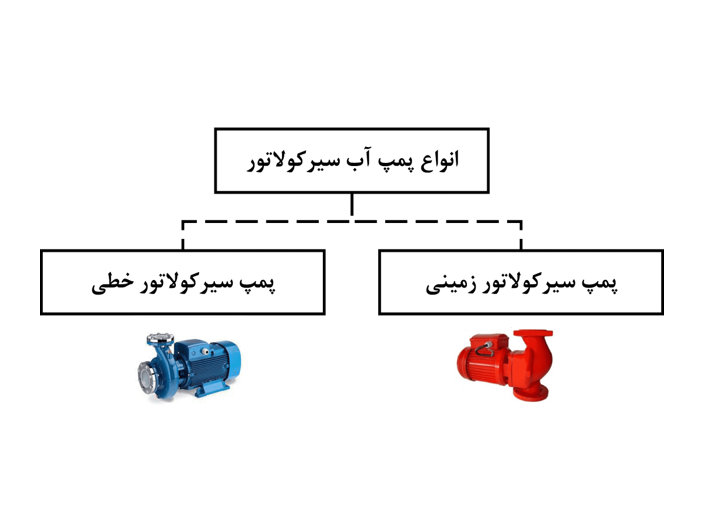
Circulator pumps are centrifugal type and are used to circulate water (hot or cold) in heating or cooling devices to supply the building’s thermal and cooling load, as well as cooling towers.
A circulator pump is a type of pump used to circulate fluid in heating, cooling, and air conditioning systems. The main purpose of this pump is to accelerate the flow of fluid and create continuous and continuous movement within the relevant system.
Circulator pumps are mainly used in central heating and cooling systems.
These systems consist of pipes and radiators that transport hot or cold water throughout the building. The circulator pump plays a key role in these systems, as it creates pressure and fluid movement, ensuring proper flow and uniform distribution of hot or cold water throughout the system.
The circulator pump operates on the principle of positive displacement. By creating pressure, the circulator pump sucks fluid from an inlet and directs it through pipes to the outlet of the system. This action causes the fluid to continuously move through the system and circulate.
Circulator pumps usually have variable settings that allow the user to adjust the flow rate of the fluid. This feature allows the user to increase or decrease the flow of fluid as needed and adjust the amount of heating or cooling desired.
In addition, circulator pumps are usually equipped with modern technologies such as electronic pumps and intelligent management, which optimize energy consumption and provide more efficient performance.
These pumps are widely used in residential, commercial, and industrial buildings to improve efficiency and reduce energy consumption in heating and cooling systems. Circulator pumps are divided into the following two categories depending on how they are placed in the circuit:
1) in line:
In this case, the pump is installed on the circuit, which is called a linear pump.
Linear pumps can be single or double, single-turn or multi-turn.
In multi-turn and twin-turn pumps, the motor either operates one pump or both pumps, changing the pump head and flow rate, which can help save energy compared to the building’s energy requirements in each season.
2) end suction:
In high capacities, the pump and electric motor are heavy and the circuit cannot bear their weight, so in this case, it is placed on the chassis on the ground and special shock absorbers are used to reduce vibrations (large in-line pumps are also installed on the ground).
Click to view all types of water supply and fire pumps and other safe fire alarm and extinguishing products from Imen Datis Asia.
In circulating systems, since there is no static head and only dynamic head, at zero flow, the head is also zero. As the flow rate increases, the system head also increases. The pump operating point is actually the intersection of this system curve with the pump curve.
To select a circulator pump, we must first calculate their required head and flow rate, and then, once the required flow rate and head are determined, refer to the manufacturer’s catalog and select the appropriate pump.
Since heating and cooling systems are a closed cycle, the circulator pump does not increase the system pressure, but only compensates for the longitudinal and local pressure drops caused by the piping system, valves, other radiators, fan coils, air conditioners, etc. In other words, the required head (pump head) is equal to the head equal to the sum of the longitudinal and local pressure drops.Since the head of the circulator pump must be large enough to circulate water to the farthest heating or cooling device, we calculate the head of the circulator pump based on the longitudinal and local pressure drops of the most critical path (which is usually the longest path) relative to the pump. This means that first we find the longest path and then we calculate its longitudinal and local pressure drops and based on that, we obtain the required head.
1) Longitudinal pressure drop:
The pressure drop that occurs due to water friction with the inner wall of the pipe in straight pipes is called longitudinal pressure drop.
This pressure drop depends on the water flow velocity, the roughness of the inner surface, the length and diameter of the pipe.
To calculate it accurately, the Darcy-Weisbach or Hazen-Williams equation can be used, which is very difficult and time-consuming.
2) Local pressure drop: The pressure drop caused by valves, elbows, boiler, chiller, collector, and the last heat or cooling device is called local pressure drop, which we usually obtain approximately.
The flow rate of the circulator pump depends on the thermal load of the building and must be large enough to circulate the amount of hot water required by all heat distribution devices and the hot water tank used in their circuit if they are on a common circuit.
The flow rate of the circulator pump is equal to (the sum of the flow rates of the heat distribution devices plus the required flow rate of the hot water tank used)
However, if two separate pumps are used for the heating system and the hot water tank, the flow rate of each pump must be calculated separately.
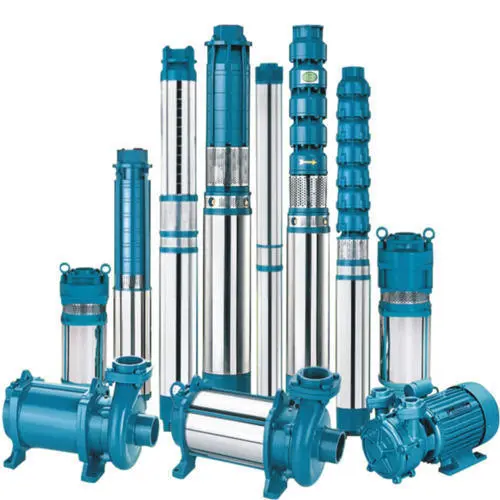
Stage pumps are made of different materials depending on the type of fluid. The most commonly used material is steel. However, cast iron is also used to make the pump body, impeller, and base. These pump products have different models with different features.
The vertical stage pump is installed vertically and is completely portable and space-saving. As you can see, it consists of an electric motor and a pump assembly that includes impellers, diffusers, and inlet and outlet connections. When fluid enters it and passes through the impeller, the pressure increases.
Imen Datis Asia Company, relying on up-to-date knowledge, continuous activity and cooperation with highly specialized forces, is now recognized as one of the leading private sector companies in the field of safety and firefighting industry. This company is always trying to continuously and dynamically play a role in expanding the safety and firefighting infrastructure of our beloved country of Iran and take great steps towards achieving goals such as the development and industrialization of new technologies.