Imen Datis Asia Co

 Imen Datis Asia Co

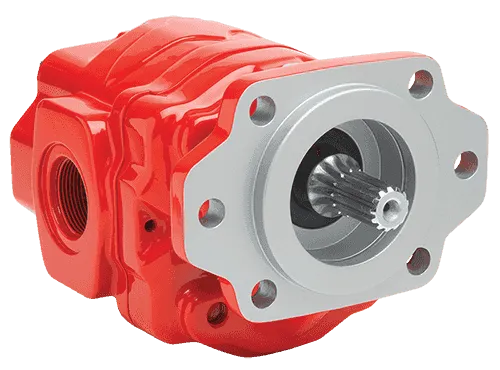
پمپ هیدرولیک hydraulic pump یک دستگاه است که برای ایجاد جریان و فشار در سیستمهای هیدرولیکی استفاده میشود. این پمپها عموماً از نیروی مکانیکی برای ایجاد فشار هیدرولیکی استفاده میکنند. آنها از انرژی مکانیکی (مانند موتورهای الکتریکی، موتورهای داخلسوز و یا موتورهای دیگر) برای ایجاد جریان و فشار مایعات هیدرولیکی استفاده میکنند. این نوع پمپها برای انتقال نیرو و انرژی در سیستمهای هیدرولیکی مورد استفاده قرار میگیرند، که در ماشینآلات صنعتی، خودروها، سیستمهای آبیاری و بسیاری از کاربردهای دیگر مورد استفاده قرار میگیرند.
The following are the important features of a pump:
Required inlet pressure, capacity against a given head and efficiency percentage for pumping a specific fluid.
* راندمان پمپاژ برای سیالات با وسیکوزیته ی پایین مانند آب بسیار بالاتر از سیالاتی با ویسکوزیته ی بالا مانند ملات است.به این دلیل که ویسکوزیتهی یک مایع به طور معمول با افزایش دما کاهش می یابد. در صنعت برای پمپاژ بهتر سیال چسبناک را گرم میکنند.
طرز کار پمپهای هیدرولیکی به این صورت است که برای ایجاد جریان مایع هیدرولیک به منظور انتقال قدرت به سیستمهای مختلف استفاده میشوند. این پمپها عمدتاً از موتورهای مختلفی مانند موتورهای الکتریکی یا موتورهای داخل سوختی برای ایجاد حرکت و فشار در مایع هیدرولیک استفاده میکنند. طرز کار پمپ هیدرولیک به این صورت است که انرژی مکانیکی را که بر اثر موتور احتراقی، الکتریکی یا … به وجود آمده به انرژی الکتریکی تبدیل میکند. بنابراین بر اثر خلاء ایجاد شده، فشار اتمسفری ایجاد میشود که باعث حرکت سیال به طرف مجرای ورودی شده و از آنجا به سایر قسمتها جریان پیدا میکند. عملکنندههای سیستم، قدرت هیدرولیکی که توسط پمپ ایجاد شده است را به انرژی مکانیکی تبدیل میکنند. بنابراین نتیجه میگیریم که وظیفه پمپ هیدرولیک ایجاد جریان سیستم است.
These pumps generally work as follows:
1. Fluid absorption: First, the hydraulic pump dissolves hydraulic fluid from a source such as a reservoir or environment. This fluid is usually a hydraulic oil with suitable viscosity and properties.
2. Pressure generation: Then, the pump compresses the liquid by means of its internal parts (such as pistons, vanes, or teeth) and pressure is applied to it. This pressure causes the hydraulic fluid to move towards the pump outlet.
3. Transfer of pressure and flow: hydraulic fluid goes to the hydraulic system with the pressure applied from the pump and provides the mechanical power needed to do the work in that system. For example, this fluid can move through cylinders and pistons in machinery or create pressure to perform various tasks.
4. Liquid return: after doing its work, the hydraulic liquid returns to the pump as a closed loop to be reabsorbed and compressed and the process repeats.
Hydraulic pumps are used in various industries such as automobile manufacturing, construction industries, and other industries due to their ability to provide the necessary power and pressure to run machinery and hydraulic systems.
Required inlet pressure, capacity against a given head and efficiency percentage for pumping a specific fluid.
Pumping efficiency for fluids with low viscosity such as water is much higher than fluids with high viscosity such as mortar. Since the viscosity of a liquid usually decreases with increasing temperature. In industry, they heat viscous fluid for more efficient pumping.
Contrary to some wrong definitions, the pump does not create pressure in the circuit and its task is to make the desired liquid flow. In other words, the pump supplies mechanical energy to the hydraulic system with the help of electric, combustion, etc. engines. Basically, in a hydraulic system, the pressure represents the amount of resistance against the output of the pump. For example, if the output of a pump with positive displacement is open to the atmosphere, while maintaining the fluid flow, due to the lack of resistance to the flow, there will not be a pressure higher than the atmospheric pressure.
On the other hand, if the pump output is completely blocked, theoretically infinite resistance is created against the flow because there is no space for the fluid to move; Therefore, in order to protect the components of hydraulic systems, it is necessary to use a safety valve. When the system pressure reaches the set value, the safety valve opens the flow path to the tank and limits the pressure level in the circuit.
In simple terms, it can be seen that the output flow of the pump with positive displacement (regardless of the minor leaks inside the pump) is constant and does not depend on the system pressure. Therefore, if there is no place for the fluid to move (such as the valve is blocked or the actuator reaches the end of the stroke) or if the resistant load increases too much, the pressure control valve (safety valve) should be used to protect the pumps. A positive place is necessary against extra pressure.
The technical specifications of hydraulic pumps may vary depending on their type and use. This specification includes several factors that are very important for choosing and using the right pump:
Pump capacity or flow rate: This characteristic indicates the volume of hydraulic fluid that the pump can transfer in a certain period of time. It is usually measured in units of volume per second or liter per minute.
Working pressure: This item indicates the pressure that the pump can create in the hydraulic fluid. It is usually measured in units of bar or pascal.
Rotation speed: The rotation speed of the motor or internal mechanism of the pump is also very important. This should be in line with system specifications and business needs.
Efficiency: The efficiency of the pump refers to its performance and efficiency, which is usually expressed as a percentage of the consumed power to the output power of the pump.
Structural materials: The structural materials of the pump, such as steel, aluminum or steel, play an important role in the resistance and useful life of the pump.
Size and dimensions: The dimensions of the pump should be compatible with the installation location and the system in which it is used.
Special features: Some pumps may have special features, such as gear or piston pumps, that are suitable for specific applications.
In general, to choose the right pump, you need to consider the technical specifications in the user manual or advice from experts and engineers specializing in the field of hydraulics and industrial machinery.
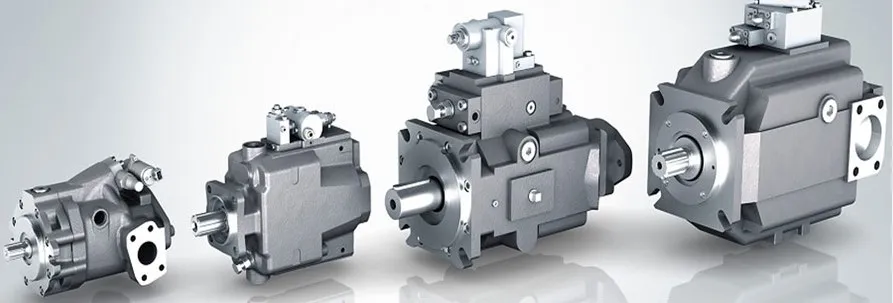
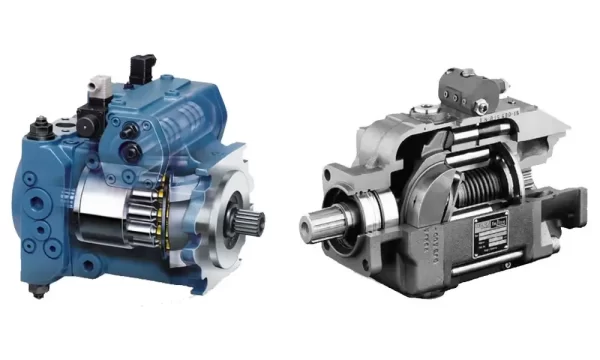
Axial piston pumps are a type of motor pumps that use a piston to create flow and pressure in fluids. These pumps use a piston mechanism that moves fluid by moving the piston up and down.
The operation of these types of pumps is that when the piston moves in a direction, pressure is applied to the fluid, and then the fluid is directed to the pump outlet. These types of pumps are used to transfer fluids that require high pressure or low volume, such as oils or chemicals.
Among the advantages of axial piston pumps, we can mention the ability to create high pressure, high durability and precise transfer of fluids. But these pumps usually require maintenance and periodic maintenance, and are also larger and heavier in terms of size and weight than other types of pumps.
Radial piston pumps are another type of piston pump in which the pistons move radially around the axis of rotation instead of vertically. These pumps are usually used to transfer fluids in systems that require rotational movement.
In radial piston pumps, the pistons move around the central rotating axis and thereby move the fluids alternately. These types of pumps are usually used in applications such as metal bed pumps (mining), hydraulic and gas systems, and even in medical devices.
The advantages of radial piston pumps include the ability to withstand high pressures, the ability to work at different pressures, and use in different temperature and pressure conditions. But also, like most piston pumps, they require periodic maintenance and repairs and may require replacing parts and spare parts.
Vane pumps use vanes to move fluids from an inlet side to an outlet side. By rotating continuously, these vanes compress the fluids and direct them to the pump outlet. These pumps are used in water tanks, air conditioning systems, various industries including oil and gas industries, chemical processes and even in airplanes as air pumps.
In the case of an unbalanced vane pump, there may be a design or performance problem with this type of pump that causes uneven performance or balance. These unevenness may be caused by various factors such as the imbalance in the vanes, the presence of structural errors or the materials used in the construction of the pump, or even problems in the installation and adjustment stages.
To solve the problems of the unbalanced vane pump, it is necessary to diagnose the problem accurately and investigate the exact cause of this unevenness. This may require checking and readjusting the pump, replacing damaged parts, or even requiring more specialized repairs and adjustments.
Gear hydraulic pumps are types of pumps used in hydraulic systems. These pumps transfer fluid from one place to another based on the rotation cycle of the gears.
The ribs that are inside a chamber are in contact with each other and by rotating, the space between them changes volume and as a result, the fluid inside the pump is moved.
These pumps are usually suitable for medium to high pressure hydraulic systems. They are designed in such a way that they can adjust the fluid flow and create the desired pressure. Also, due to the gear structure, they have less noise and vibration than some other pumps.
One of the strengths of this type of pump is its efficiency and long life. On the other hand, these pumps may require periodic maintenance, and failures may also occur in case of improper use or maintenance failure.
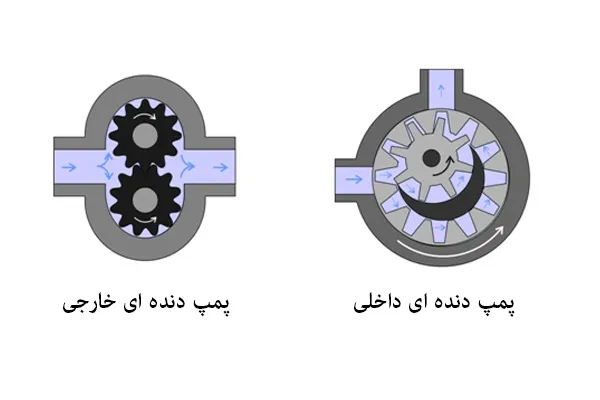
As a technical description, the earring pump usually refers to pumps that have a similar structure to an earring, in the sense that two or more rotating vanes are located in parallel or parallel inside a chamber, and by rotating, they draw fluid from one side of the inlet. They move to the exit.
These types of pumps are usually used to transfer fluids with medium to high flow rate and pressure. They are used for various applications including chemical, oil and gas, water and wastewater, food industries and even in hydraulic engineering applications.
Despite the similarity with earring in structure, earring pumps are actually a more complex system than a simple earring, as they have different mechanical parts and coatings used to withstand high pressure and flow and maintain efficiency.
A screw pump is a type of hydraulic pump that is used to transfer fluids. These pumps use a screw, usually linear or helical, to move fluids. The screw is located inside a chamber or tube and rotates to move fluids.
The operation of the screw pump is based on the rotation of the screw. When the rotating screw changes direction, the fluids inside the tube or chamber also move. These types of pumps are generally used to transfer fluids with high viscosity or even fluids containing solid particles. Among their usual applications, we can mention the transfer of food, oil, chemicals and sludge materials.
Screw pumps are of interest due to their simple structure, reliable performance and applicability in different conditions. Also, they create minimal impact and pressure changes in the fluid, which is very important for sensitive or high viscosity materials.
Gyrotor pump is one of the types of pumps used in hydraulic systems that uses the term “gyrotor” to describe its internal structure. These types of pumps use the rotation of a gyro rotor (a piece with conical or rectangular blades) to move fluids.
In the gyrotor pump, the fluid enters the pump and with the rotation of the gyrotor following the movement of the vanes, it moves the fluid and directs it to the pump outlet. These pumps are usually used to transfer fluids with medium pressure and flow and are used in various industries such as oil and gas, automotive, construction and hydraulic industries.
Gyrotor pumps are of two main types: sequential gyrotor pumps and parallel gyrotor pumps. In sequential gyrotor pumps, the gyrotor is sequentially located in chambers where the fluid is transferred from one gyrotor to another.
These types of pumps are relatively quiet and efficient, and if they are maintained regularly and used correctly, they can have a long life.
While in parallel gyrotor pumps, the gyrotors are located in parallel in a chamber and the fluid passes through all of them at the same time.
The efficiency of a pump depends on the amount of tolerances and precision used in the construction, the mechanical condition of the components and the pressure balance. In an ideal pump, the backlash between the involved components is considered to be theoretically zero. In practice, the gaps should be as small as possible to allow for a thin film of oil to lubricate the components. Necessary information about pump efficiency is always provided by manufacturers.
The volumetric efficiency determines the amount of leakage in the pump. The following relationships are useful for calculating volumetric efficiency:
In general, hydraulic pumps are of interest to many designers because they do not require continuous maintenance and are much easier to set up than electric systems. In hydraulic systems, power transmission is done by oil pressure, and the higher the system pressure, the higher the power and torque transmission in the system. Among the advantages of hydraulic pumps, the following can be mentioned:
Hydraulic pumps are one of the most widely used types of pumps in the industry and mobile machines. These pumps are widely used in most industrial devices and road construction and construction machines such as cranes due to their high power transmission. Among the fields of use of hydraulic pumps, the following can be mentioned:
قیمت پمپهای هیدرولیک به عوامل زیادی همچون نوع پمپ انتخابی، قدرت موتور، سیالات عبوری و شرایط نصبی دارد. قیمت پمپهای هیدرولیکی با توجه به این موارد میتواند در دسته مقرونبهصرفه و یا گرانقیمت قرار بگیرد. کیفیت مواد اولیه استفادهشده نیز در قیمت پمپهای هیدرولیکی مؤثر است. هرچه مقاومت بدنه پمپ در برابر آبوهوا و رطوبت بیشتر باشد ، قیمت آن نیز افزایش مییابد زیرا که باید آلیاژها و فلزات گرانقیمتتری در ساخت بدنه استفاده شود.
Among the popular types of hydraulic pumps, the piston hydraulic pump is the most expensive and the gear hydraulic pump is the cheapest, and this is mostly due to the complexity of their operation. The higher the complexity of the pumps, the higher the price of hydraulic pumps and the cost of maintenance. If your pump has additional sensors to monitor various factors, the cost of installation and maintenance will increase due to the increased complexity.
In this article, we tried to examine hydraulic pumps and their application. You can contact our experts at Imen Datis Asia to get more information about different types of pumps and to inquire about the prices of different products and pumps.
Screw pumps work with gears inside the housing and have a very low operating noise level.
Another type of positive displacement hydraulic pump is piston pumps. The mechanism of this pump is rotary, after which the pistons go back and forth in the cylinder, and after the oil is drawn into the cylinder, it is pumped into the system. The price of these pumps is higher than other types of hydraulic pumps, but if the piston is sealed accurately, the efficiency and life of this pump will increase greatly. Of course, due to the complexity of the design of the piston pump, it is difficult to repair it. Also, the piston pump is produced in three types, which are as follows.
Hydraulic pumps wear out over time. If you are able to find out about the source of the problem at the right time and before the complete failure and fix the failure of the hydraulic pump, you will avoid additional costs or the complete replacement of the pump. Among the signs of hydraulic pump failure are: excessive sound of the hydraulic pump, decrease in pump efficiency, decrease in the amount of oil in the tank, decrease in the viscosity of the oil used in the pump, wear due to friction and corrosion of the pump, pump leakage and increase in the temperature of the output fluids. and…
Imen Datis Asia Company is recognized as one of the top companies in the private sector in the field of safety and fire fighting, relying on modern knowledge, continuous activity and the cooperation of highly specialized forces. This group is always trying to continuously and dynamically expand the safety and firefighting infrastructure of our beloved country Iran and take great steps in order to achieve goals such as the development and industrialization of new technologies.